We Use CookiesWe use cookies to enhance the security, performance, functionality and for analytical and promotional activities. By continuing to browse this site you are agreeing to our privacy policy

10 Best Reflector Telescopes

From leading brands and best sellers available on the web.
By clicking on a link to a third party's website, log data is shared with that third party.

45,000 reviews analyzed

#1
Best Choice
Sky-Watche
Sky-Watcher

Sky-Watcher Quattro 200P Imaging Newtonian - Large Aperture 8-inch Reflector Optical Tube for Astrophotography

Fast Delivery
10.0
1 137 bought in past month
#2
Value for Money
Sky-Watche
Sky-Watcher

Sky-Watcher Quattro 150P Imaging Newtonian 6" for Fast Astrophotography Black

Fast Delivery
8.5
1 035 bought in past month
Shipping from Amazon's AU regional warehouses
#3
Celestron
Celestron

Celestron 21045 Power Seeker Telescope, Reflector, Black

Fast Delivery
8.5
933 bought in past month
#4
Celestron
Celestron

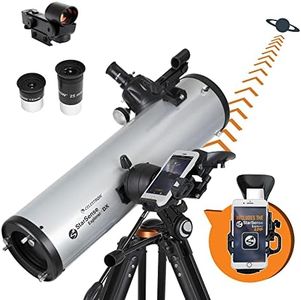
Celestron 22461 StarSense Explore DX 130 Newtonian Reflector Telescope with Smartphone App-Enabled Technology - Includes Two Eyepieces, Phone Dock and Height-Adjustable Tripod, Black

Fast Delivery
8.2
831 bought in past month
#5
Celestron
Celestron

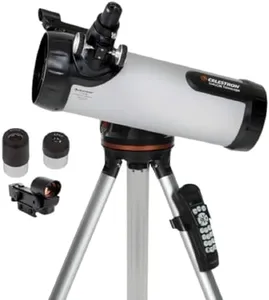
Celestron 114LCM Computerized Telescope (Black)

Fast Delivery
8.2
729 bought in past month
#6
Celestron
Celestron

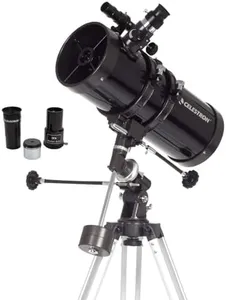
Celestron 21049 PowerSeeker 127EQ Reflector Telescope, Black

Fast Delivery
7.6
627 bought in past month
#7
Sky-Watche
Sky-Watcher

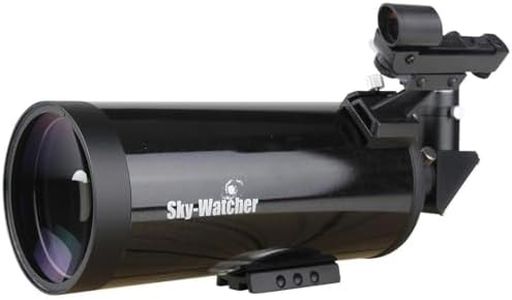
Sky-Watcher Skymax 102mm Maksutov-Cassegrain - Large Aperture Compound-Style Reflector Telescope

Fast Delivery
7.6
525 bought in past month
#8
Sky-Watche
SkyWatcher

Sky-Watcher 150 750 EQ3 Reflector Telescope & Tripod

Fast Delivery
7.6
423 bought in past month
#9
Skyoptikst
Skyoptikst

Skyoptikst 1400x 150 mm Reflector Newtionan Astronomical Telescope High Power Equatorial Mount Star Planet Moon Saturn Jupiter

Fast Delivery
7.0
321 bought in past month
#10
Telescope
SOLOMARK

Telescope 130EQ Newtonian Reflector Telescopes for Adults, Professional Telescopes for Adults Astronomy, Comes with 1.5X Barlow Lens Smartphone Adapter & 13% T Moon Filter

Fast Delivery
7.0
219 bought in past month

More great picks just for you
Sky-Watche
Sky-Watcher

Sky-Watcher Heritage 130mm Tabletop Dobsonian 5-inch Aperture Telescope – Innovative Collapsible Design – Easy to Use, Perfect for Beginners, Black White (S11705)

Fast Delivery
117 bought in past month
Celestron
Celestron

Celestron 31045 AstroMaster 130 EQ Reflector Telescope

Fast Delivery
15 bought in past month
Bresser Na
BRESSER

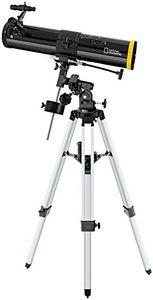
Bresser National Geographic 76 700 Eq Reflector Telescope for Children

Fast Delivery
Skyoptikst
Skyoptikst

Skyoptikst 750x 150 mm Reflector Newtionan Astronomical Telescope High Power Equatorial Mount Star Planet Moon T150-750EQ-US T150-750EQ-US

Fast Delivery
Celestron
Celestron

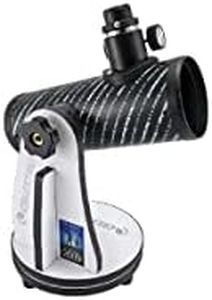
Celestron FirstScope Beginners Astronomy Telescope for Moon, Planets and Stars, 72mm Aperture, Dobsonian-Style Tabletop Mount, Black (21024)

Fast Delivery
Explore other best-rated products in this category

Our Top Picks

#1

Winner

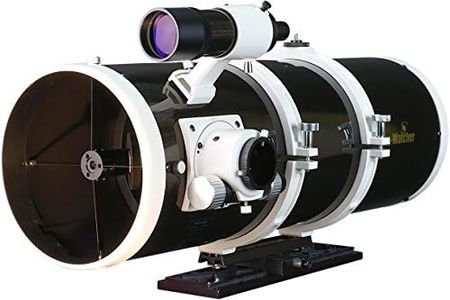
Sky-Watcher Quattro 200P Imaging Newtonian - Large Aperture 8-inch Reflector Optical Tube for Astrophotography
Sky-Watcher Quattro 200P Imaging Newtonian - Large Aperture 8-inch Reflector Optical Tube for AstrophotographySky-Watcher
amazon-logoView Product

The Sky-Watcher Quattro 200P is an 8-inch reflector telescope designed primarily for astrophotography. Its large 8-inch aperture gathers plenty of light, making it suitable for capturing detailed images of faint celestial objects. The fast f/4 focal ratio means it has a short focal length (800 mm), allowing faster exposure times—this is great if you want to take photos without long waiting periods. The 2-inch dual-speed Crayford focuser is a nice feature that helps you achieve sharp focus smoothly, which is crucial for both viewing and imaging.

The telescope uses an oversized secondary mirror, which helps in evenly illuminating camera sensors, including full-frame DSLRs, reducing dark edges (vignetting) in photos. Knife-edge baffles inside the tube help prevent stray light from interfering, improving image contrast—important for clear astrophotography. The package includes handy accessories like tube rings, a dovetail mount compatible with popular mounts, and a decent 8x50 finderscope, so you have what you need right away without extra purchases.

Weighing about 9.5 kg and measuring roughly 81 x 41 x 46 cm, it’s moderately portable but might be a bit heavy for very casual or frequent transport. This tube is sold separately from the mount, so you’ll need to get a stable mount to use it properly, which adds to the setup complexity. While collimation (alignment of mirrors) is required for reflector telescopes, the Quattro’s design aims to minimize maintenance, but some basic knowledge or assistance might be needed to keep it performing at its best. For those interested in astrophotography and seeking a relatively fast, large-aperture reflector that comes ready with essential accessories, this model is a strong candidate. Newcomers should be prepared for some setup and learning curve, especially regarding mounting and collimation.

View Product
#2

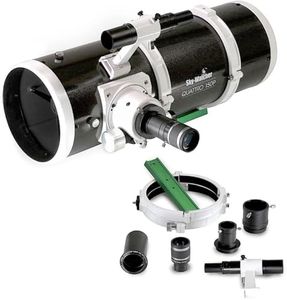
Sky-Watcher Quattro 150P Imaging Newtonian 6" for Fast Astrophotography Black
Sky-Watcher Quattro 150P Imaging Newtonian 6" for Fast Astrophotography BlackSky-Watcher
amazon-logoView Product

The Sky-Watcher Quattro 150P is designed for astrophotography enthusiasts who want a fast and capable reflector telescope. Its 150mm (6-inch) aperture combined with a short 600mm focal length gives a fast focal ratio of f/4, which is excellent for capturing wide-field images quickly. The parabolic borosilicate mirrors with special coatings boost reflectivity to 94%, helping produce bright and clear images, which is a strong advantage for detailed night sky photos. It also has an 11:1 dual-speed Crayford-style focuser, allowing for precise focusing—important when using cameras. The oversized secondary mirror supports full-frame cameras by providing better illumination across a wider field.

The telescope weighs about 8 kg and with its 56 cm tube length, it’s moderately portable but may require a solid mount and some care when transporting. Astrophotography usually calls for a stable equatorial mount, which might be sold separately. Collimation (alignment of mirrors) is essential for reflector telescopes and this model likely requires regular maintenance to ensure optimal performance, which can be a bit challenging for beginners.

The Quattro 150P suits amateur to intermediate astrophotographers seeking a fast, wide-field imaging scope with good light-gathering ability, while newcomers should be prepared to handle upkeep and invest in a quality mount to achieve the best results.

View Product
#3

Celestron 21045 Power Seeker Telescope, Reflector, Black
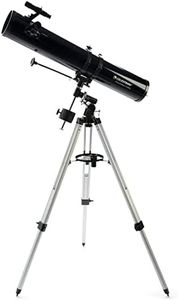
Celestron 21045 Power Seeker Telescope, Reflector, BlackCelestron
amazon-logoView Product

The Celestron 21045 Power Seeker is a reflector telescope with a 114 mm aperture, which allows it to gather a decent amount of light for viewing the moon, planets, and some brighter deep-sky objects. Its focal length of 875 mm and an implied focal ratio around f/7.7 provide a good balance between magnification and image brightness, making it suitable for beginners interested in both terrestrial and astronomical observations. The telescope comes with slow motion controls for smoother tracking of objects, which is a helpful feature for those new to stargazing. It includes erect image optics, meaning the view won't be upside down—this is great for land viewing as well as sky watching. The fully coated glass optics improve image clarity and brightness, enhancing the viewing experience.

On the downside, the telescope weighs about 5.6 kg and is over 90 cm long, which makes it somewhat bulky and less portable compared to smaller models. Setup is quick and tool-free, but as with most reflector telescopes, regular collimation (alignment of mirrors) is necessary to maintain image quality, which might require learning a bit about maintenance. The equatorial mount type it uses is good for tracking celestial objects but can be tricky for beginners to master.

This telescope is well suited for beginners or casual users who want an affordable and capable instrument for basic astronomy and daytime viewing, though those seeking very high portability or advanced features might want to consider other options.

View Product

Buying Guide for the Best Reflector Telescopes

Selecting a reflector telescope is an exciting step into the world of astronomy. These telescopes use mirrors instead of lenses to gather and focus light, making them powerful tools for observing celestial objects. To choose the best reflector telescope for your needs, understanding the key specifications and how they relate to your interests—such as observing planets, deep-sky objects, or both—is essential. By considering factors like aperture size and portability, you can make a confident choice that matches your stargazing ambitions.
Aperture (Mirror Diameter)The aperture is the diameter of the main mirror of the telescope, and it’s arguably the most important specification. A larger aperture allows the telescope to collect more light, which translates to brighter and sharper images of distant celestial objects. Aperture sizes commonly range from about 4 inches to 12 inches or more. Smaller apertures (4–6 inches) are lighter and easier to handle, making them good for beginners or those who want something portable. Mid-sized apertures (6–8 inches) offer a balance between performance and manageability, suitable for those wanting better detail of planets and deep-sky objects. Larger apertures (8+ inches) excel in light gathering and are best for serious enthusiasts interested in faint objects, though they are bulkier. Your choice should depend on how much detail you want to see, your willingness to carry heavier equipment, and the kinds of objects you hope to observe.
Focal LengthFocal length is the distance from the mirror to the point where the light is brought into focus. This spec affects both the magnification possibilities and the field of view. Shorter focal lengths provide wider fields of view, which are great for viewing large areas of the night sky (like star clusters or the Milky Way), while longer focal lengths offer higher magnification for viewing planets and the Moon in more detail. Typical reflector telescopes have focal lengths from around 500mm to 1500mm. Think about whether you want broader images or to focus in on individual objects, and choose accordingly.
Focal Ratio (f/number)The focal ratio, written as f/3.9, f/5, f/8, etc., is the focal length divided by the aperture. This ratio influences the brightness of the image and the type of observations best suited to the telescope. Lower focal ratios (f/4–f/5) produce brighter, wider images and are great for deep-sky observations. Higher ratios (f/7–f/8+) are better for planetary or lunar viewing due to their higher magnification and narrower field of view. If you’re interested in general stargazing or photography of large sky regions, choose a lower focal ratio. For detailed planetary observing, a higher focal ratio is preferable.
Mount TypeReflector telescopes come with different types of mounts, which are the structures that support and move the telescope. The most common are Dobsonian (simple, stable, easy to use for beginners and great for large apertures) and equatorial mounts (require more setup but make it easier to track objects as the Earth rotates). Dobsonian mounts are ideal if you want a straightforward, grab-and-go experience, while equatorial mounts suit those interested in longer observation sessions or astrophotography.
Portability and WeightThe size and weight of a reflector telescope affect how easy it is to set up, move, and store. Larger models can be impressive in their views, but they might be challenging to transport and require more storage space. If you plan to observe from different locations or need to carry your telescope up stairs, prioritize a more compact, lighter model. For those setting up in a backyard or permanent location, you might be able to handle a larger, heavier telescope.
Collimation and MaintenanceReflector telescopes require periodic alignment of their mirrors, a process known as collimation. Some designs hold alignment better than others, and larger or faster (low focal ratio) telescopes may need more frequent adjustment. If you prefer a low-maintenance experience, look for models acclaimed for holding their collimation, or make sure you’re comfortable with the process. Collimation isn’t hard to learn but is important for optimal image quality.